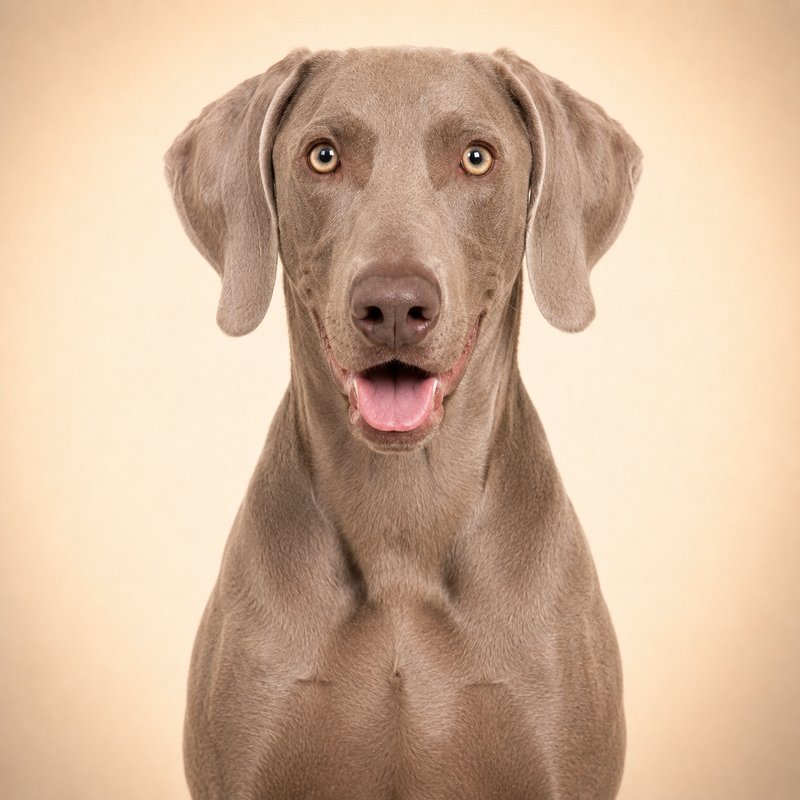
Weimaraner
The sleek silver ghost of the field.
The Weimaraner is a large German gun dog famous for its sleek silver-gray coat and striking amber or blue eyes. Athletic, devoted and intensely people-focused, it needs an active owner who can match its boundless energy and keep it close to the family.
Great points
- Striking, elegant silver-gray coat
- Athletic and tireless outdoor partner
- Smart, capable and eager to work
- Short coat needs little grooming
Things to consider
- Very high exercise needs every day
- Prone to severe separation anxiety
- Strong prey drive toward small animals
- Too boisterous for very young children
The story
Developed in early 19th century Germany by the nobles of Weimar as an all-round hunting dog, the Weimaraner was first bred to track and hold big game like boar and deer, then later refined into a versatile pointer and retriever of birds and small game.
Training
Weimaraners are clever and willing but headstrong, so they need early socialisation and firm, consistent, reward-based training. Channel their energy into obedience, scent work or canine sports to keep that quick mind from finding its own trouble.
Grooming
The short, sleek coat is very low maintenance and needs only a weekly rubdown with a hound mitt to stay glossy. Bathe occasionally, trim the nails, and check and clean the ears regularly.
Food & diet
About 2.5 to 3.5 cups of quality food a day, split into two meals to lower the risk of bloat. Feed from ground level and avoid hard exercise right after eating.
Exercise
Very high needs, at least 1 to 2 hours of vigorous daily exercise such as running, fetch or field work, plus mental challenges to prevent destructive boredom.
Health to watch
Watch for gastric torsion known as bloat, hip dysplasia, and entropion of the eyelids. Feeding smaller meals and using a slow feeder helps reduce the bloat risk.
Fun fact. The breed's ghostly silver coat and pale eyes earned it the nickname the Gray Ghost.