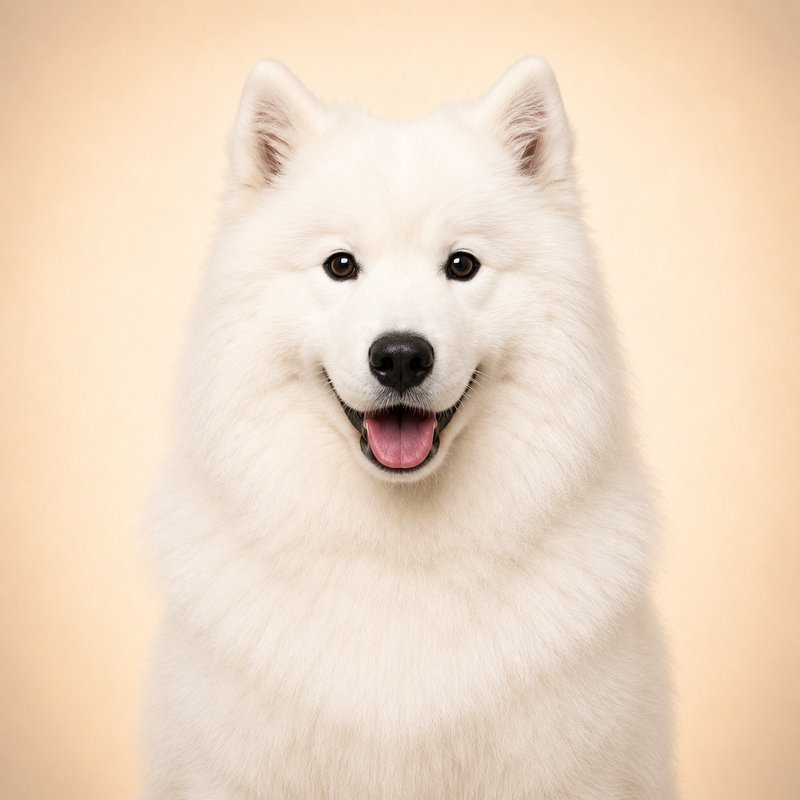
Samoyed
The smiling sled dog of Siberia
The Samoyed is a friendly, fluffy spitz bred by the Samoyede people of Siberia for herding, hauling, and hunting. Famous for its bright white coat and upturned smiling mouth, it is gentle and people-loving but vocal and demanding of company.
Great points
- Affectionate and gentle with the whole family
- Striking, thick white double coat
- Playful and excellent with children
- Hardy with an adaptable working heritage
Things to consider
- Sheds heavily all year and blows its coat
- Vocal and prone to frequent barking
- Independent streak makes training slower
- Needs plenty of exercise and company
The story
Developed by the nomadic Samoyede people of northwestern Siberia, the breed worked closely with humans to herd reindeer, pull sledges, and keep families warm at night. That closeness to people shaped the affectionate, sociable temperament seen today.
Training
Samoyeds are intelligent but independent, so they respond best to patient, reward-based training and early socialization. Consistency and variety help keep this clever dog engaged and willing.
Grooming
The dense double coat needs brushing several times a week, and daily during heavy seasonal shedding. The white coat is surprisingly self-cleaning but still requires regular care to prevent mats.
Food & diet
Feed a balanced diet measured to keep the dog lean, as the breed can gain weight without enough exercise. Split the daily amount into two meals to support steady digestion.
Exercise
Plan at least an hour of daily activity such as walks, running, or play, plus tasks that use the breed's working drive. Mental challenges help prevent boredom-driven mischief.
Health to watch
Common concerns include hip dysplasia, progressive retinal atrophy, diabetes, and Samoyed hereditary glomerulopathy, an inherited kidney disease. Responsible breeders screen for hip and eye problems.
Fun fact. The upturned corners of a Samoyed's mouth form the famous Sammy smile, which also helped stop the dog from drooling and forming icicles in the cold.