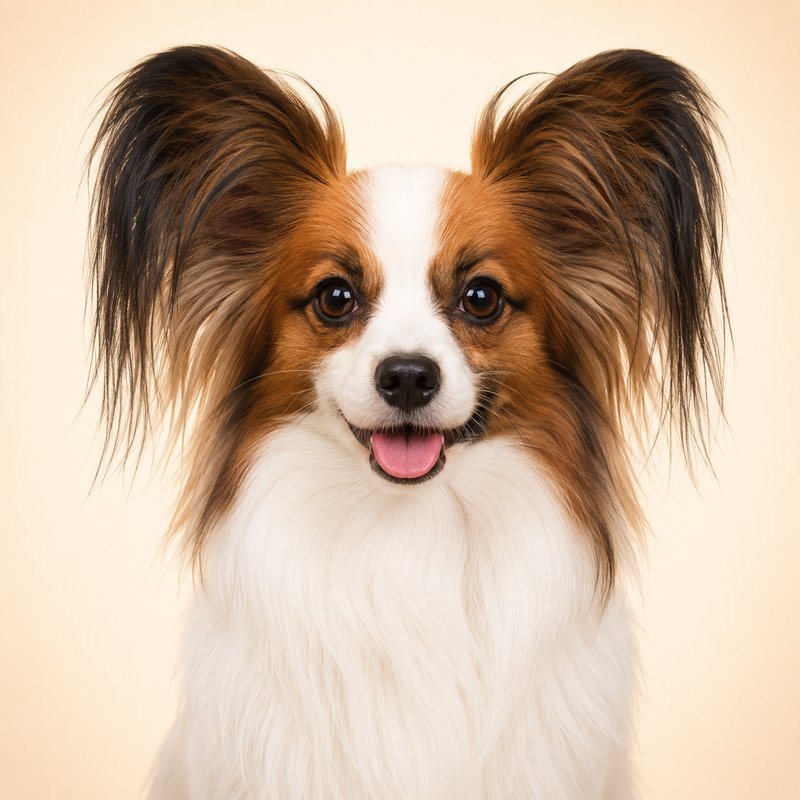
Papillon
Butterfly ears, big-dog brain
The Papillon is a tiny, elegant toy spaniel known for its distinctive butterfly-shaped ears and a sharp, eager-to-please mind. Despite its small size it is one of the most trainable and athletic of the toy breeds, excelling in agility and obedience.
Great points
- Highly intelligent and very easy to train
- Light shedder with no doggy odor
- Long lifespan and generally robust
- Affectionate, lively, and travel-friendly
Things to consider
- Can be a frequent barker if bored
- Fragile build, easily injured by rough handling
- Needs daily mental and physical activity
- Prone to dental problems and knee issues
The story
The Papillon descends from the dwarf spaniels painted by European masters as far back as the 16th century, long favored by French and Spanish nobility. Its name is French for butterfly, a nod to the large fringed ears, while the drop-eared variety is called the Phalene.
Training
Papillons are quick studies that thrive on positive reinforcement and respond eagerly to clicker and reward-based methods. Early socialization and consistent house training help curb stubborn or yappy tendencies.
Grooming
The single, silky coat has no undercoat and needs brushing two or three times a week to prevent tangles behind the ears and on the legs. They shed lightly and require only occasional baths.
Food & diet
Feed a high-quality small-breed diet in measured portions to avoid weight gain on such a tiny frame. Splitting meals into two servings helps keep blood sugar stable.
Exercise
A couple of short walks plus active play or training games each day keeps a Papillon happy. They love agility, fetch, and trick work that channels their energy and intellect.
Health to watch
Common concerns include patellar luxation, dental disease, progressive retinal atrophy, and a soft spot on the skull in some pups. Responsible breeders screen for eye and knee issues.
Fun fact. Papillons consistently rank among the smartest dog breeds and routinely outperform much larger dogs in agility competitions.