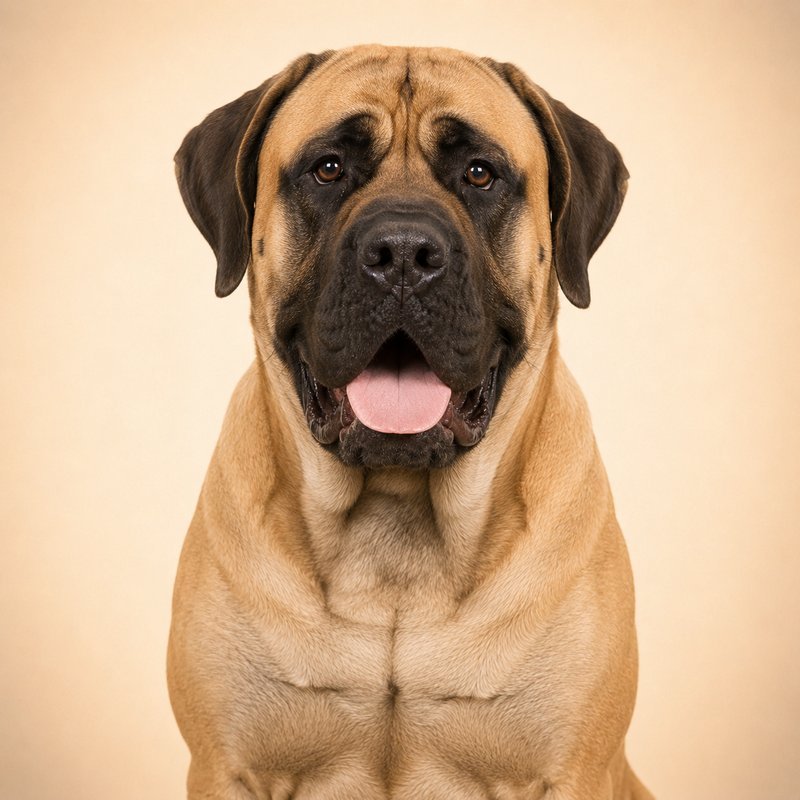
Mastiff
Gentle giant with a guardian's heart.
The Mastiff, also called the Old English Mastiff, is one of the largest and heaviest dog breeds, with a massive head and a calm, dignified nature. Despite its imposing size it is gentle and devoted at home, a watchful but easygoing family guardian.
Great points
- Calm, gentle and affectionate at home
- Naturally protective without being aggressive
- Short, low-maintenance coat
- Quiet and low-energy indoors
Things to consider
- Drools and slobbers heavily
- Short lifespan for the breed's size
- High food and vet costs
- Sheer size needs space and careful handling
The story
The Mastiff is an ancient guarding breed whose molosser ancestors fought in war and the arena, and English estates later kept it to guard property and livestock. Bred for centuries in England, it was refined into the giant, steady protector known today.
Training
Mastiffs are intelligent but sensitive and a little stubborn, so calm, consistent and reward-based training with early socialisation is essential while the dog is still small enough to manage.
Grooming
The short coat needs only a weekly brush and the odd bath, but be ready to wipe drool and clean the facial folds to prevent skin problems.
Food & diet
A giant breed that eats a lot, so feed a quality large or giant-breed diet in measured meals. Controlled, steady puppy growth protects the joints.
Exercise
Modest needs: a couple of gentle daily walks are plenty, and hard exercise should be avoided while young to protect growing joints.
Health to watch
Hip and elbow dysplasia, bloat (gastric torsion), heart disease (cardiomyopathy), eye conditions and cancer. Choose health-tested parents.
Fun fact. The Mastiff is often cited as the heaviest dog breed, with the record holder, a Mastiff named Zorba, reported at over 155 kg.