Bichon Frise
A cheerful powder puff of joy
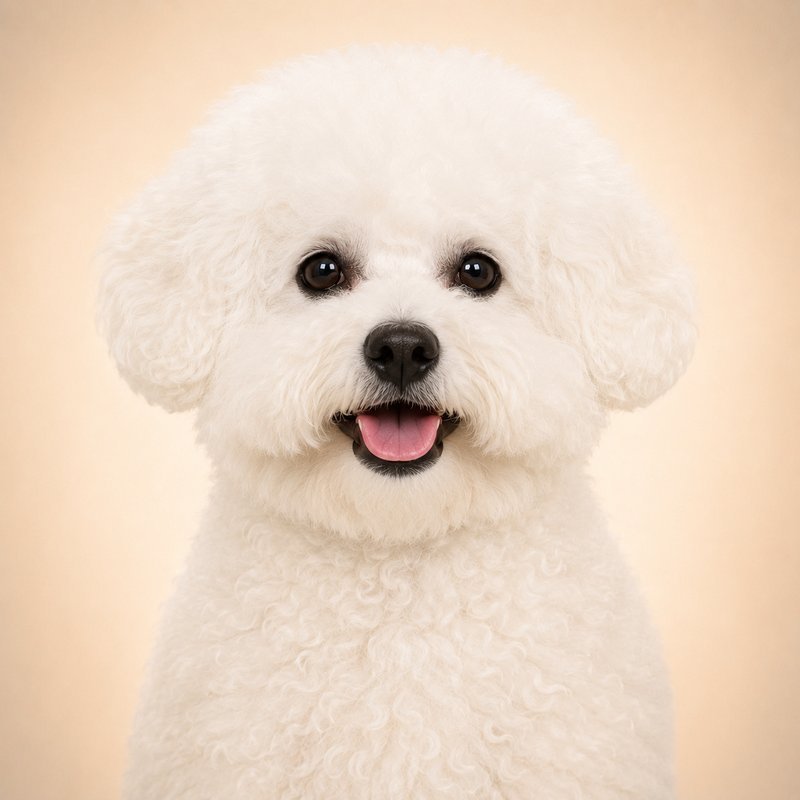
The Bichon Frise is a small, sturdy companion dog known for its fluffy white coat and bright, playful personality. Affectionate and merry, it thrives on human company and adapts well to apartment living.
Great points
- Cheerful and very affectionate
- Low-shedding coat suits many allergy sufferers
- Friendly with people and other pets
- Compact size fits apartment living
Things to consider
- Prone to separation anxiety when left alone
- High grooming and clipping needs
- Can be slow to fully house-train
- May bark at strangers and noises
The story
The Bichon Frise descends from small white Mediterranean lapdogs and became a favorite of European nobility and sailors who traded them along Spanish and French routes. After falling from fashion, the breed was revived in France and Belgium in the early twentieth century.
Training
Bichons are clever and eager to please, responding best to gentle, reward-based training with treats and praise. Early socialization and patient, consistent house-training help avoid common setbacks.
Grooming
The curly double coat needs daily brushing to prevent mats and professional clipping every four to six weeks. Regular eye cleaning helps reduce tear staining on the white fur.
Food & diet
Feed a measured, high-quality diet suited to small breeds and limit treats to prevent weight gain. Dental-friendly food and chews support oral health.
Exercise
A daily walk plus indoor play and games meet this lively breed's moderate needs. They enjoy fetch and learning tricks as much as physical activity.
Health to watch
Common concerns include allergies and skin issues, dental disease, patellar luxation, bladder stones, and ear infections.
Fun fact. The name Bichon Frise comes from French and roughly means curly lapdog, a nod to its soft, curling coat.